
Mid-May 1984
The MV Friendship cut through the early afternoon waters at a steady nine knots, her diesel engine thrumming beneath my feet as spray misted over the bow. Our entire family was aboard the sturdy houseboat, bound for Batangas City after the dry season vacation had drawn to a close. We had disembarked Muelle Bay past noon time with an estimated time of arrival of 2:30 PM. School would resume in just a few weeks, and this journey would mark our transition back to the routines of everyday life before the Friendship continued her supply run to Busuanga, Palawan.
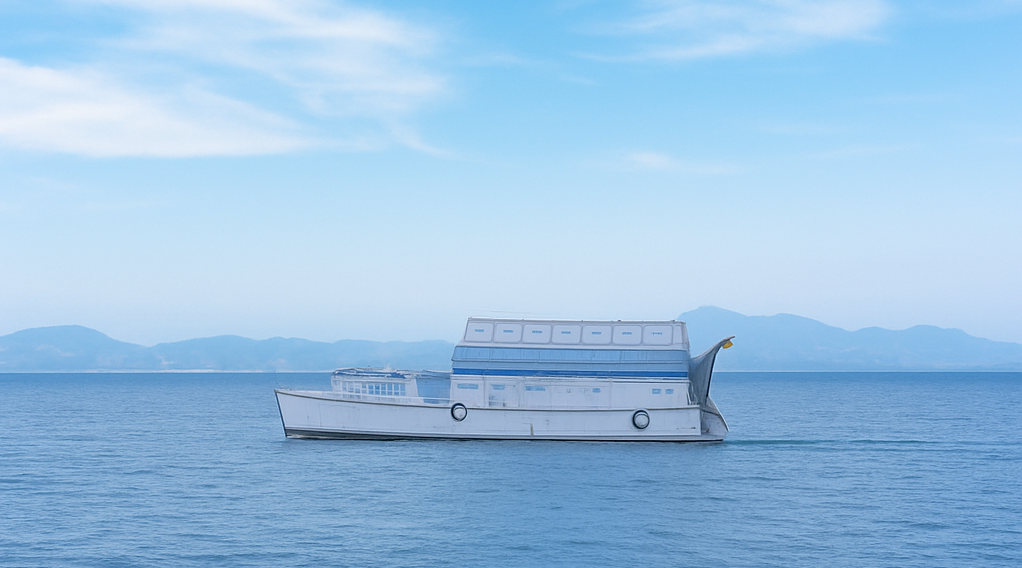
At the helm stood Tatay, his weathered hands steady on the wheel. “Come here, anak,” he motioned, his calloused palm guiding mine to the worn steering wheel. At fifteen, with third year high school approaching, I was old enough to help with the boat but young enough to still feel wonder at the sea’s power. The wheel vibrated under my palms, alive with the boat’s pulse through the water. The wheel vibrated under my palms, alive with the boat’s pulse through the water.
Uncle Nilo—Inay’s younger brother and our marine engineer—crouched beside the engine gauges, oil-stained fingers tracing dials and meters with practiced precision. But his eyes held that distant look, the same one that surfaced whenever someone mentioned the Windsong 57. He was among the thirteen survivors of that capsizing—a tragedy that had taught our family to respect the sea’s unpredictable nature. Water had claimed that vessel and seventeen souls with it.
For the first stretch of our journey, conditions remained calm. The waters of Verde Island Passage stretched before us flat as glass—no whitecaps, no chop, just the Friendship’s wake spreading behind us in a perfect V. Two-year-old Sally slept curled in the pilot room bunk, thumb in her mouth. In the main cabin, Inay folded laundry while Demi and Fiona played cards on the galley table, their voices mixing with the engine’s steady rumble.
But as we approached the notorious boundary waters off Verde Island and Matoco Point, Uncle Nilo straightened. His jaw tightened as he studied the dark outline ahead. This stretch of water had earned its treacherous reputation through countless incidents—an invisible underwater eddy current, made more dangerous by the early onset of the southwest monsoon.
“Matoco Point,” he muttered, wiping his hands on a rag.
The memory of 1977 surfaced unbidden—when our family had encountered these same hostile waters after attending a family friend’s wedding in Manila. We were on board the MB AC-I (Ah-Seh-U-No) along other 45 other passengers on the Batangas City-Puerto Galera trip.
Then the swells began.
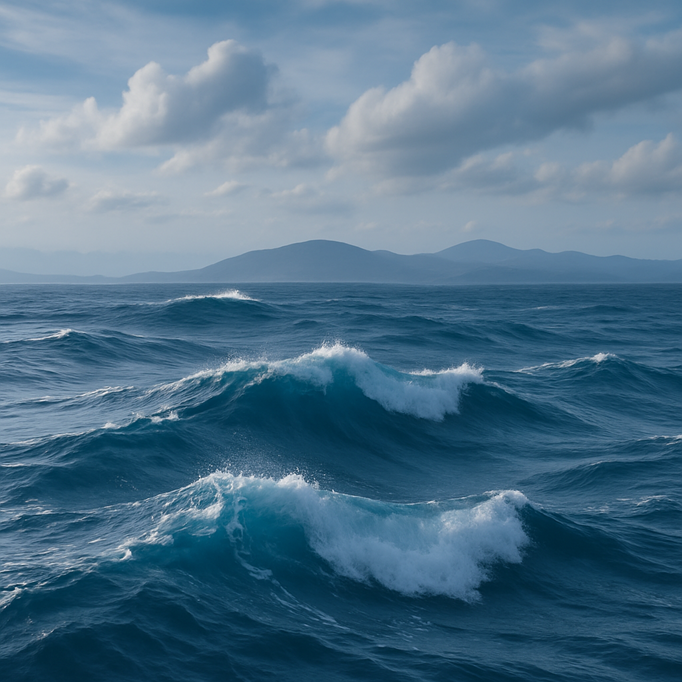
The first one lifted our bow like a giant’s hand. The Friendship climbed, paused at the crest, then dropped into the trough with a bone-jarring thud. Two to three meters high, they rolled toward us with relentless persistence. Sally’s eyes flew open. Her wail cut through the engine noise.
“Slow her down!” Uncle Nilo’s voice cracked like a whip.
Tatay pulled back the throttle immediately. The engine’s rhythm changed, deepened. Fighting against such swells would be futile—we had to work with the sea, not against it. But the swells kept coming, rolling mountains of green water, each one higher than the last.
The Friendship, despite her stabilizing rocks positioned in the keel area near the engine room, began to struggle against forces beyond her design. The boat tilted—port side dipped toward the churning surface. My knuckles went white on the wheel as I fought to keep my balance.
On the open front deck, our two acetylene tanks and two oxygen tanks began their deadly dance, rolling toward the rail with each pitch and yaw. Metal scraped against metal—a sound like nails on slate, the metallic scraping and clanging adding an ominous percussion to the wind’s howling.
“Jesus, Mary, Joseph…” Inay’s voice rose from the cabin.
Another swell caught us broadside. The Friendship rolled so far to starboard that I could see water racing past the pilot house window. Uncle Nilo grabbed the radio mount—empty of any radio that might call the Coast Guard for rescue. His scarred knuckles stood out white against brown skin. We were entirely dependent on seamanship, engineering knowledge, and divine providence.
Sally’s cries turned to screams. In the cabin, chairs scraped across the floor. Something glass shattered. Demi’s playing cards scattered like autumn leaves.
“Hail Mary, full of grace…” Fiona’s young voice joined Inay’s prayer as they formed their prayer circle, voices barely audible above the groaning of the hull and the crash of water against our bow.
The oxygen tanks joined their acetylene brothers in their rolling ballet toward the edge. One tank hit the rail post with a clang that rang through my bones. Six inches from going overboard. Six inches from an explosion that would end everything.
Wave after wave. Each one brought the possibility of capsizing. The boat would climb each green wall, hesitate at the peak where wind tore at our faces, then plunge into the valley beyond. My stomach rose and fell with each cycle. Bile burned the back of my throat. Water crashed over our bow, sending spray across the entire vessel until salt spray stung my eyes and tears mixed with seawater on my cheeks.
Water crashed over our bow, sending spray across the entire vessel until salt spray stung my eyes and tears mixed with seawater on my cheeks.
Uncle Nilo’s lips moved without sound, his eyes fixed on something beyond the windshield—perhaps the ghost of the Windsong, perhaps his own prayers. The stabilizer rocks in our keel groaned with each roll. Wood timbers creaked their protest against the sea’s awesome power.
Thirty minutes of this dance with death felt like hours. Any moment, the boat could capsize. Yet somehow, through skill, prayer, and perhaps sheer determination, the Friendship held together.
Then, like walking from a storm into sunlight, we passed through that treacherous point. Beyond Matoco Point, as we entered the protective embrace of Batangas Bay, the swells gentled. The wind dropped to a whisper. The Friendship’s violent roll became a soft, rhythmic sway.
Sally’s crying faded to whimpers. The tanks settled against their restraints. In the cabin, chairs stopped sliding and Inay’s rosary beads clicked their measured prayer. Batangas City’s familiar skyline wavered through the heat haze ahead—solid land, safety, home.
Uncle Nilo exhaled slowly and returned to his gauges. Tatay’s shoulders dropped from around his ears. My hands, still gripping the wheel, began to uncramp finger by finger.
We were safe. We were sound. We had survived another encounter with the sea’s power.
The deck smelled of sour vomit when we disembarked. Still shaken, none of us spoke of what had just passed. But in the silence that followed, broken only by the gentle purr of the engine and the soft lap of calm water against our hull, we all understood what the ocean had taught us once again—that it demands respect, preparation, and humility from all who dare to traverse its depths. That harrowing boat ride would remain etched in our memories forever.
*Names have been changed to observe privacy. This vignette is interwoven in the upcoming memoir “The Woman We Call Inay.”
No responses yet